Tree Cabling & Bracing in Johnson City, TN
Not every structurally weak tree needs to come down. Cabling and bracing can support a tree with a weak branch union, a heavy multi-trunk structure, or a valuable tree with a known defect, extending its life and reducing the risk of failure without losing the tree entirely. Don's Tree Service installs cabling and bracing systems across Johnson City as an alternative to removal when the tree is otherwise healthy.
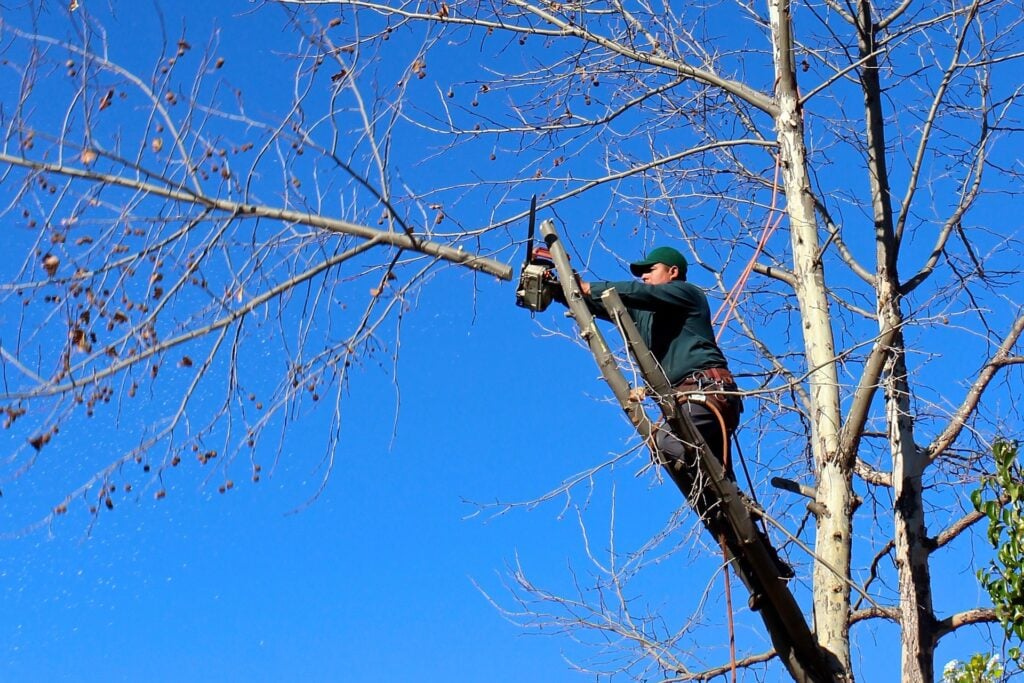
These systems don't fix a structural weakness, they manage the risk of it, buying the tree years of stable life it might not otherwise have.
Targeted Support
What Cabling and Bracing Involves
- Cabling Steel cables installed high in the canopy between major limbs or stems, reducing stress on a weak union without restricting the tree's natural movement.
- Bracing Rigid rods installed through the trunk or major limbs at a point of structural weakness, typically used alongside cabling for more severe defects.
Strategic Placement
How Cabling Placement Is Determined
Cable placement isn't arbitrary. It's set based on where the structural weakness actually is and how the tree moves in wind. A cable installed too high does little to relieve stress on the union below it; one installed too low can restrict natural sway enough to create new stress elsewhere in the canopy. We look at where the weak union sits, how the canopy is distributed on either side of it, and how the tree has responded to wind and weight over time before deciding where cables go. Bracing rods, when needed, go directly through the point of structural weakness, usually a split or included bark union in the trunk itself, to physically hold the two sides together rather than just reducing the load on them.
When It Applies
When Cabling or Bracing Makes Sense
Mature Trees
Multi-Trunk Trees
High-Value Trees
Assessment Findings
Shade Trees
Limitations
What It Doesn't Fix
Cabling and bracing manage structural risk, they don't reverse decay or disease. A tree with significant internal rot or root failure is usually a removal or hazardous-tree case, not a cabling candidate. Part of our job is telling you honestly which category your tree falls into, since installing cables on a tree that's actually failing from the roots up gives a false sense of security rather than solving anything.
Professional Grade
Materials and Hardware
Cabling systems use galvanized steel cable rated for the load involved, installed with hardware designed to minimize damage to the tree at the attachment points. Bracing rods are typically threaded steel rod installed through a drilled hole at the point of weakness. Both are designed to last for years with periodic inspection, not as a temporary fix. We use hardware sized appropriately for the tree in question rather than a one-size-fits-all approach, since an undersized cable on a large canopy won't hold up under real wind load.
Step-by-Step
Our Process
Assessment
Installation
Follow-up
Transparent Pricing
What Affects Cost
Number of Cables or Braces
Tree Height and Canopy Access
Bracing Rods
Number of Trees
We'll assess the specific defect and give you a firm price during your on-site evaluation rather than a rough estimate over the phone.
Long-Term Value
Preserving Established Trees
A mature shade tree took decades to grow, and that's not something a new planting replaces on any timeline that matters to a current homeowner. When a large, otherwise healthy tree develops a structural defect, whether from age, storm stress, or how it grew as a young tree, cabling and bracing are often the difference between losing that tree entirely and keeping it standing safely for another decade or more. It's worth having a tree assessed before assuming removal is the only option, especially for trees that provide significant shade, privacy, or property value.
Local Experts
Why Homeowners Choose Don's Tree Service
Honest Guidance
Licensed and Insured
Local Service Area
Learn More