Large & Hazardous Tree Removal in Johnson City, TN
Some trees are a bigger job than a standard removal. A tall hardwood leaning toward the house, a tree with visible trunk decay, one growing directly over a power line or roofline. these jobs need more than a chainsaw and a ladder, and they need a crew that treats the added risk seriously instead of rushing through it. Don's Tree Service handles large and hazardous tree removal with a 75-foot bucket truck, built for exactly this kind of work.
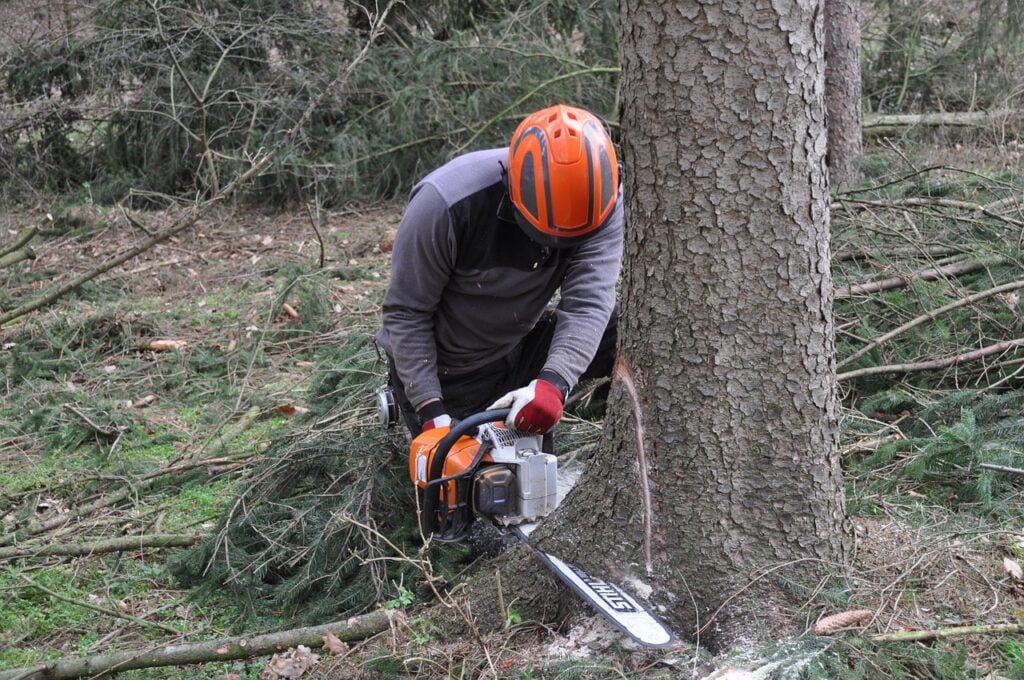
If a tree shows any of these signs, it's worth a professional assessment before the next storm makes the decision for you.
Identify the Risk
What Makes a Tree "Hazardous"
A hazardous tree isn't necessarily an obviously dead or dying one. Some of the most dangerous trees look healthy from a distance and only reveal the problem on closer inspection. Signs worth taking seriously include:
- Visible Lean Especially a new or worsening one.
- Trunk Issues Cracks, cavities, or fungus at the base (signs of internal decay).
- Dead Limbs Dead or broken major limbs still attached ("widowmakers").
- Root Issues Roots lifting, exposed, or cut (weakened anchoring).
- Overhead Growth Growth directly over a structure, driveway, or power line.
- Multi-Trunk Trees With a failing union between stems.
Urgency Levels
Grading the Severity of a Hazard
Not every hazardous tree is the same level of urgent. We generally think about hazard trees in a few tiers:
Immediate Concern
Developing Concern
Monitor
Part of what a hazard assessment does is sort a tree into one of these categories honestly, rather than treating every concern as equally urgent, which either scares someone into an unnecessary removal or leaves a genuinely dangerous tree standing too long.
Step-by-Step
Our Process
Free Hazard Assessment
Removal Plan
Removal
Cleanup
Precision Techniques
Rigging and Controlled Lowering
For hazardous removals near a structure, we often use rigging, ropes and pulleys that control exactly where and how fast a cut section falls, rather than letting gravity do the work. This lets us lower heavy limbs and trunk sections straight down or guide them away from a roofline instead of dropping them freely, which matters when there's only a few feet of clearance between the tree and whatever it's threatening. Rigging adds time to a job compared to a straightforward fell, which is part of why hazardous removals near structures typically cost more than open-yard work.
Professional Equipment
Why This Isn't a DIY or Basic-Crew Job
Hazardous tree removal has more failure points than a routine job. A tree with internal decay can behave unpredictably when cut, since the wood doesn't respond the way healthy wood does and can split or shift in ways that are hard to predict from the ground. A lean toward a structure means there's little room for error in how sections come down. This is where equipment and experience matter most. Our 75-ft bucket truck lets us work on tall, compromised trees without putting a climber inside a tree that might not hold weight safely, and rigging lets us control where wood goes instead of hoping it falls clear.
Transparent Pricing
What Affects Cost
Tree Size
Degree of Hazard
Proximity
Crane Assistance
Rigging
Hazardous removals near a house or other structure typically cost more than the same size tree removed in an open yard, since the extra time spent rigging and controlling each cut adds to the job. We'll explain exactly what's driving the price during your assessment rather than leaving you to guess.
Local Experts
Why Homeowners Choose Don's Tree Service
75-ft Bucket Truck
Licensed and Insured
Local Service Area
Learn More