Tree Service Across Johnson City, TN
Johnson City's older neighborhoods, especially areas near downtown and around Founders Park and the ETSU campus, carry a lot of mature hardwood tree cover. That's part of what makes the city look the way it does, and it's also why so many service calls here involve tall oaks and maples with decades of growth, not saplings. The city has also grown considerably outward over the past couple of decades, particularly north and east along the I-26 corridor, where newer subdivisions sit on land that was open farmland or wooded lots not long ago. That mix of old and new means we handle very different jobs depending on which part of the city we're in. Don's Tree Service is based in Johnson City, at 2720 Watauga Rd, and handles tree removal, trimming, stump grinding, and emergency work throughout the city.
Local Context
Older Neighborhoods vs. Newer Growth
- Established, tree-heavy neighborhoods near downtown, Tipton-Haynes, and the streets surrounding ETSU tend to have large, mature hardwoods planted decades ago, often closer to structures and to each other than current building practices would allow. Jobs in these areas are more likely to involve sectional removal, careful clearance trimming around rooflines, and stump grinding for trees that have outgrown their original spot on a lot that hasn't changed much in decades.
- Newer residential growth particularly north of downtown and along the corridors leading toward the interstate, tends to have younger tree cover, sometimes legacy trees left standing from before the land was developed, alongside newly planted landscaping trees. Work here more often means clearing a lot before construction, assessing whether an older tree left over from before development is still a safe fit next to a new home, or early-stage pruning to establish structure in younger trees before they mature into a bigger job.
Construction
Working With Builders and Developers
As Johnson City continues to grow, we regularly work directly with builders and developers clearing lots ahead of construction. This means coordinating timing around a project schedule, clearing to the footprint the site plan calls for, and handling stump removal to the depth a foundation or grading plan requires rather than the standard grind depth used for a residential yard. If you're a contractor working in the Johnson City area and need a crew that can turn around a cleared lot on a construction timeline, we can talk through scheduling directly and work around your project's specific needs.
Comprehensive Care
What We Handle in Johnson City
Tree removal
Tree trimming and pruning
Stump grinding
Emergency response
Land clearing
Tree health assessments
Site Conditions
Why Local Conditions Matter Here
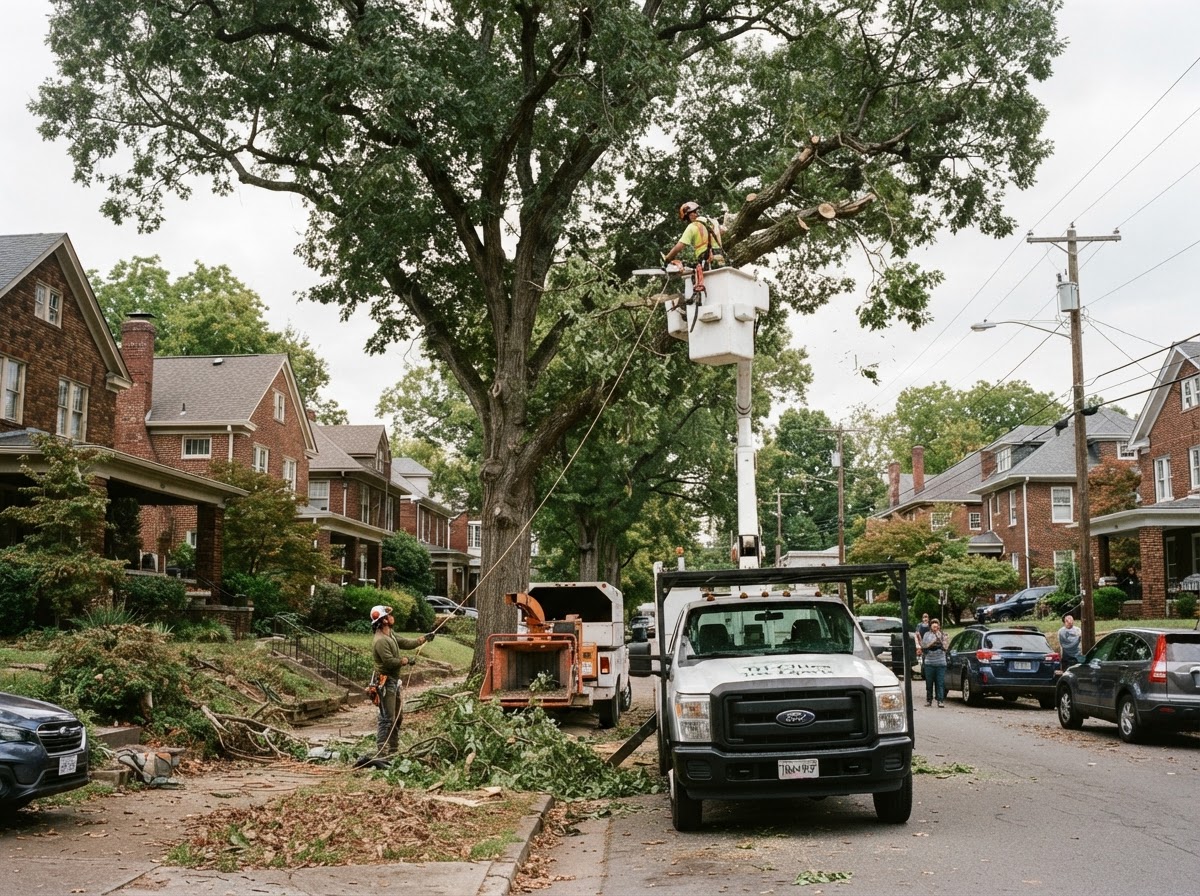
Johnson City's older neighborhoods often have large trees planted close to homes and each other, a pattern from decades ago that predates current setback thinking. That means more jobs here involve careful sectional removal or trimming near structures rather than open-yard work. Our 75-ft bucket truck is built for exactly this kind of tight-clearance job. In newer subdivisions, the challenge is different: legacy trees from before development sometimes stand closer to a new house than they would have to an older one, since lot layouts and setbacks have changed over the decades. We factor in which situation we're dealing with during every estimate, since it changes both the approach and the price we quote.
Older Johnson City neighborhoods have overhead service drops running through mature canopies, and limbs that rub a line are a common call. Who handles it depends on which line it is. Anything touching BrightRidge's primary lines on the poles is the utility's job; keep everyone at least 30 feet back and call them first. The service line running from the pole to your house is where we come in. We trim the tree clear of it with clean cuts at the branch collar, keep the canopy's natural shape where we can, and haul off every branch. If the tree is too far gone to trim, we'll tell you and quote the removal.
Coverage Area
Service Area Within Johnson City
Most of our Johnson City work happens in four zip codes. South and west of downtown in 37604, the Tree Streets neighborhood earns its name: blocks of older homes under big oaks and maples, around the same South Side School grounds that now hold a state-certified arboretum. Around ETSU in 37614 and over by Mountain Home, jobs usually mean tight access between parked cars, sidewalks and campus buildings. North of downtown in 37601, close to our yard on Watauga Road, older lots off North Roan Street sit next to newer subdivisions. Out toward Boones Creek and Gray in 37615, growth along I-26 keeps putting new homes beside trees that were there first. We cover all of it, plus the rest of Washington County.
Weather Impact
Seasonal Considerations for Johnson City Trees
Northeast Tennessee sees ice storms in winter and early spring that add significant weight to tree canopies, along with occasional straight-line wind events. Large, mature hardwoods in the city's older neighborhoods, many decades old and some with developing structural issues that haven't been addressed, are the trees most likely to generate emergency calls after these events. If you have large oaks or maples on an established lot that haven't been assessed recently, it's worth having them looked at before the next storm season rather than after, since catching a developing problem early is always easier than responding to it once it's down.
Ash used to be one of the most common yard trees in Johnson City. Emerald ash borer changed that; Tennessee placed Washington County under quarantine for the beetle in 2014, and most untreated ash here is now dead or dying. Dead ash dries out and turns brittle, so limbs can drop without warning and climbing the tree gets risky. We take dead ash down from the bucket truck or in sections from the ground. Eastern hemlock has its own problem in East Tennessee, hemlock woolly adelgid, and a thinning, gray-looking hemlock near the house is worth a free look before winter.
Our Crew
Who Does the Work
AAA Don's Tree Service is a family-owned company based on Watauga Road in Johnson City. The crew is run by Nathan Roark, who quotes most jobs in person and is on site when the work happens; you'll see his name in a lot of our Google reviews. We're licensed and insured in Tennessee, and estimates are free.
Learn More
Frequently Asked Questions
Need Tree Service in Johnson City?
Get a free, no-obligation estimate for your property.