Tree Service in Elizabethton, TN
Elizabethton sits along the Watauga and Doe Rivers, with terrain that ranges from flat riverside lots to steep, wooded hillsides heading toward Roan Mountain and Watauga Lake. That mix means tree jobs here vary a lot more than in a flat suburban grid: some properties are straightforward, others involve slope, root systems near riverbanks, or large trees on hillside lots with tricky access. Don's Tree Service provides tree removal, trimming, stump grinding, and emergency response throughout Elizabethton and the Carter County area.
Local Terrain
Riverside Properties vs. Hillside Properties
- Riverside lots along the Watauga and Doe Rivers tend to have deeper, moister soil that supports large root systems extending further underground than you'd expect from the tree's visible size. Removal on these properties means accounting for that root spread, both for the fell itself and for whether stump grinding needs to account for larger-than-typical roots. Flooding history along the riverbanks can also affect root stability over time, something worth factoring into a hazard assessment for older trees close to the water.
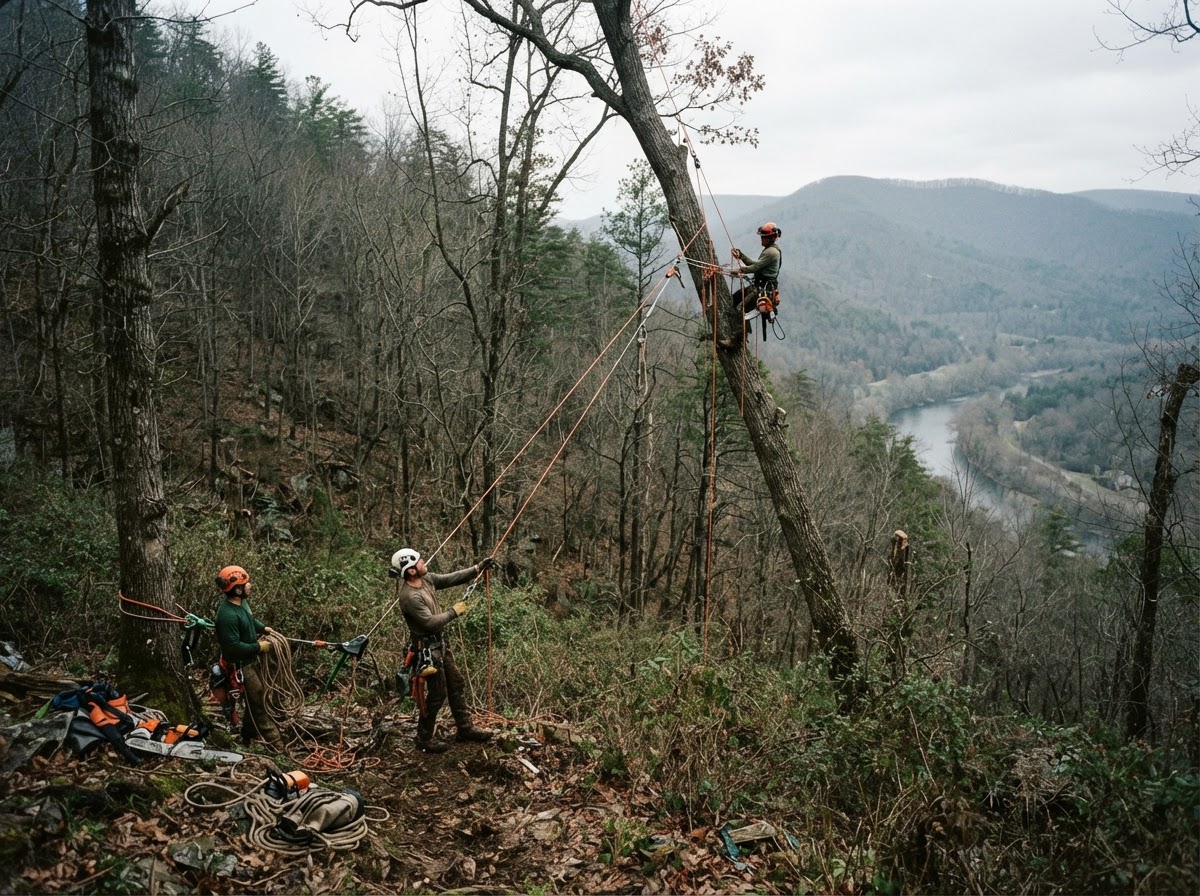
- Hillside properties heading toward Roan Mountain and Watauga Lake present a completely different challenge: slope. Equipment staging, felling direction, and where debris naturally wants to go all change on a grade compared to flat ground. Trees on a steep hillside also tend to lean toward available light in ways that flat-ground trees don't, which affects fall direction planning. Access itself can also be a factor, since a driveway that switchbacks up a hillside doesn't accommodate equipment the same way a straight, flat driveway does. We assess slope, lean, and access together on every hillside job, not just tree size and species.
Comprehensive Care
What We Handle in Elizabethton
Tree removal
Tree trimming and pruning
Stump grinding
Emergency response
Large and hazardous tree removal
Tree health assessments
Weather Impact
Storm Risk in the Mountains and Valleys
Elizabethton's position between river valley and mountain terrain means it sees a wider range of storm conditions than a flat inland town. Wind funnels differently through valleys than across open ground, and higher elevations near Roan Mountain get heavier ice accumulation in winter storms than the valley floor below. That means a hillside property and a riverside property in the same storm event can end up with very different damage: the hillside dealing with wind-thrown trees and heavier ice loads, and the riverside dealing with saturated ground and root failure from prolonged wet conditions. We factor in which situation applies when responding to emergency calls in this area, since the right approach for a wind-toppled hillside tree is different from a river-saturated one that's simply lost its footing.
Logistics
Equipment Access on Difficult Terrain
Not every hillside or riverside property accommodates our equipment the same way. Some hillside lots have driveways too narrow or steep for the bucket truck, which means relying more on rigging and manual sectional work instead. Some riverside properties have soft ground during wetter months that requires plywood or mats to protect the lawn and avoid getting equipment stuck in saturated soil. We assess access as part of every on-site estimate, not as an afterthought once a crew shows up and discovers a problem.
Site Conditions
Why Local Conditions Matter Here
Elizabethton's terrain isn't uniform. A property near the river faces different root and soil conditions than one on a hillside heading toward Roan Mountain. Slope affects how we stage equipment and plan a fell, and riverside lots sometimes have root systems that extend further than expected due to water access. We factor terrain into every estimate here, not just tree size. A tree that would be a straightforward removal on flat ground in town can require an entirely different plan once it's on a 30-degree slope with limited truck access, and pricing reflects that difference honestly rather than treating every job in the area the same way regardless of its actual site conditions.
Learn More
Frequently Asked Questions
Need Tree Service in Elizabethton?
Get a free, no-obligation estimate for your property.